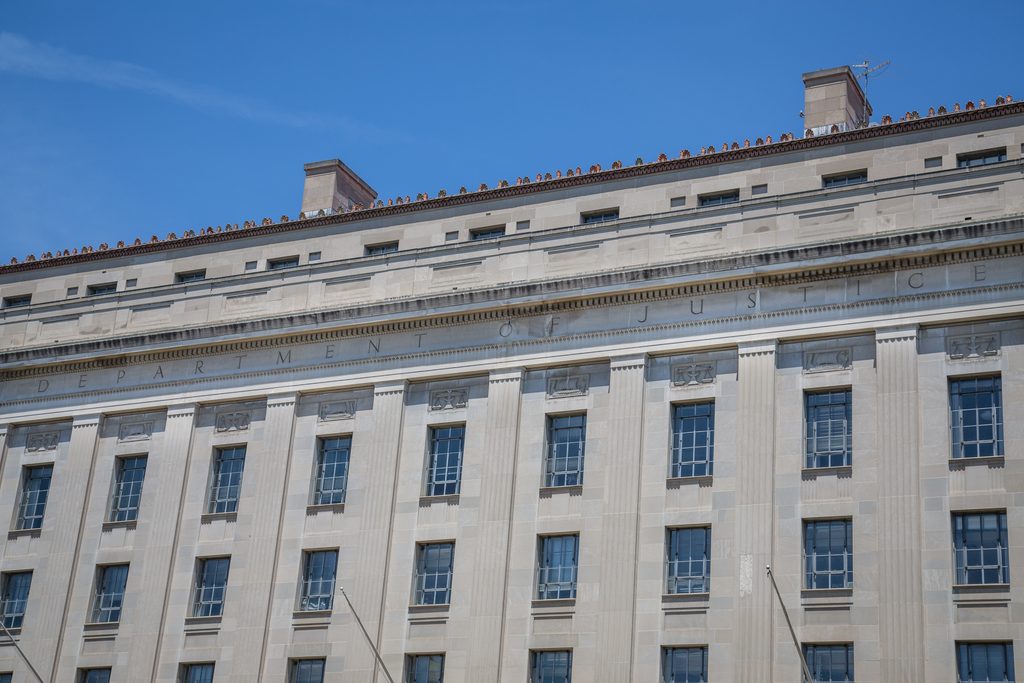
Dearborn was among eight Michigan cities selected for federal election monitoring Tuesday, Nov. 3, according to the U.S. Department of Justice.
The DOJ called it the largest monitoring effort in department history, with approximately 1,000 monitors and observers sent to jurisdictions in all 50 states for the first time, according to a department press release. The effort is coordinated by the DOJ’s Civil Rights Division.
Michigan’s eight monitored cities are Dearborn, Detroit, Flint, Grand Rapids, Hamtramck, Lansing, East Lansing and Warren.
The DOJ initially notified seven Michigan municipalities in October that monitors would be present on Election Day, according to an Oct. 22 state announcement. Those letters went to Detroit, East Lansing, Flint, Grand Rapids, Hamtramck, Lansing and Warren. Dearborn was not on that October list but appeared on the department’s Nov. 3 nationwide roster.
In states with some of the hardest-fought Senate contests, monitors were assigned to cities and counties with disproportionately high levels of Black and Hispanic residents, according to U.S. Census data, USA Today reported. USA Today described Dearborn as the first city in the country with a majority population descended from the Middle East or Northern Africa.
The scale marks a sharp increase. The DOJ announced monitoring in 64 jurisdictions across 24 states for the 2022 midterms and 86 jurisdictions across 27 states for the 2024 presidential election.
According to the Michigan Attorney General’s office, DOJ monitors cannot question voters, handle ballots or voting equipment, or disrupt election administration. The state’s Oct. 22 press release noted that monitors have no special legal authority beyond that of any poll watcher.
Attorney General Dana Nessel said in the Oct. 22 statement that DOJ monitors are a standard part of the election process. She added that her office would pursue accountability for anyone who illegally obstructs elections or intimidates voters or election workers.
Gov. Gretchen Whitmer said in the same statement that Michigan elections are “safe and secure” and that the presence of federal monitors is an expected part of the process.
The deployment drew opposition from voting rights groups. The NAACP sought an emergency order blocking federal law enforcement agents from serving as election monitors, according to its Nov. 2 announcement. The organization raised concerns about personnel drawn from the Bureau of Prisons, Drug Enforcement Administration and Bureau of Alcohol, Tobacco, Firearms and Explosives.
U.S. District Judge Reggie Walton denied the request without prejudice Nov. 2, citing government assurances about restrictions on monitors. His order required the DOJ to ensure monitors would not carry firearms, display agency insignia or have arrest authority.
Assistant Attorney General Harmeet K. Dhillon of the Civil Rights Division said in the department’s statement that the DOJ was “pursuing transparency for elections in an assertive and nondiscriminatory manner.”
Residents with questions or complaints about federal voting rights can call the DOJ’s election hotline at 800-253-3931 or email [email protected].